


» This post contains a paid partnership with Reliefband.
If you’ve been on a GLP-1 for more than a few weeks, you already know the feeling. It’s not always the big, obvious kind of nausea. Sometimes it’s quieter than that. A wave that shows up out of nowhere in the car line. A meal that sounded good an hour ago and now feels like a personal attack. The moment you realize you’re doing math in your head about whether you can make it through a work call without excusing yourself.
Nobody warns you how often this shows up in the in-between moments. Not the dramatic ones. The ordinary ones. And when it happens in front of other people, the instinct is to shrink, apologize, explain, act like you’re fine. You’re not being dramatic. Something real is happening in your body, and there’s an actual mechanism behind it.
what’s actually happening in your gut
GLP-1 medications work in part by slowing gastric emptying, which is a clinical way of saying your stomach holds onto food longer than it used to. That’s part of why you feel full faster and stay full longer. It’s also exactly why nausea shows up. Food sitting in your stomach longer means more signals get sent up your vagus nerve, the same nerve that runs the communication line between your gut and your brain, telling your brain “something is off down here” even when nothing is actually wrong.
This is why traditional nausea advice doesn’t always land for this specific kind of nausea. Ginger chews and crackers are built for stomach viruses and motion sickness, not for a nerve that’s getting overstimulated because digestion is running slower than usual. It’s also why so many people on this medication end up reaching for prescription anti-nausea meds that come with their own tradeoffs: drowsiness, fog, another thing to time around your dose, another thing that can interact with what you’re already taking.
That combination, a nervous system running the signal too hot, and a limited toolkit for calming it back down, is the actual problem. Not willpower. Not doing the medication wrong. A nerve doing exactly what a slowed-down gut tells it to do.
the fix has to interrupt the signal, not sedate you
Most of what gets handed to you for nausea was never built for this version of it. It was built for stomach bugs and motion sickness, or it comes in pill form and asks you to swallow one more thing on top of a medication that already changed how your gut processes everything. Prescription anti-nausea meds work, but they come with the tradeoff nobody mentions upfront: drowsiness, fog, a dosing schedule to keep straight, and one more thing that has to metabolize alongside a GLP-1 that’s already asking a lot of your system.
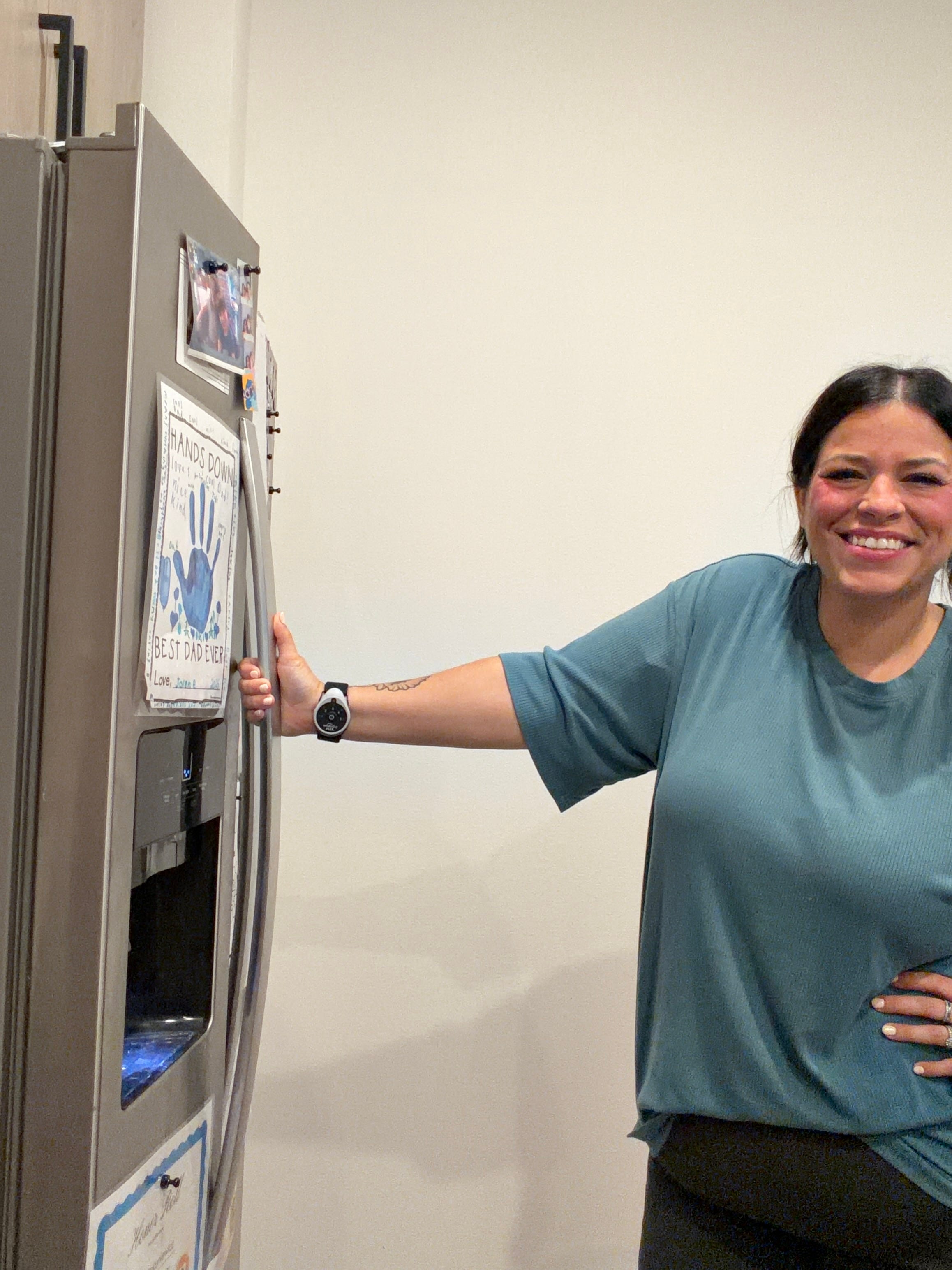
This is where Reliefband was actually a surprise to me. It’s not a pill. It’s not a supplement. It’s a wearable device, worn like a watch, that uses neuromodulation, a mild pulse aimed at the nerve pathway carrying that nausea signal, to interrupt it instead of sedating your way through it.
FDA-cleared, backed by more than 50 clinical studies, and the technology was proven out long before GLP-1s were part of the conversation. You’re not the test case here. The research already exists, this is just the first time it’s being pointed at this specific problem.
Because it isn’t a drug, there’s also nothing for it to interact with. No new variable added to a system you’re already tracking closely. And because there’s nothing to metabolize, there’s no drowsiness, no fog, none of the grogginess that comes with the oral options. You stay present for the rest of your day instead of trading one kind of unusable for another.


what is Reliefband, actually
It’s a wristband. You wear it like a watch. Inside it is a small device that sends a gentle electrical pulse into the underside of your wrist, right where a nerve sits close to the skin. That nerve connects to the part of your brain that controls nausea. The pulse interrupts the nausea signal before it fully lands, kind of like static crossing a phone line so the message doesn’t come through clearly.
There’s no medicine in it. Nothing gets absorbed into your body. It’s not a patch, it’s not a pill, it’s not anything you swallow or apply. It’s closer to a TENS unit (those little devices people use for muscle pain) except this one is calibrated specifically for nausea instead of pain.
You turn it on, pick an intensity level, and wear it on your wrist for as long as you need it. That’s the whole mechanism. No chemicals, no digestion, no waiting for something to kick in the way a pill would.
it works on your timeline, not a dosing schedule
Here’s the part that actually matters day to day. You don’t have to catch it early. You don’t have to guess in the morning whether today’s a nausea day and plan around it. Reliefband works whether you put it on before the first flicker or after the wave has already hit, and it works in minutes either way. There’s no dose to time, no window to catch, nothing to plan around your injection day or your last meal. It’s ready the second it’s on your wrist, which is the only way something like this actually gets used consistently. Nausea on a GLP-1 rarely shows up on a convenient schedule. The relief shouldn’t require one either.
Intensity adjusts too, which matters more than it sounds like it would. A wave in the car line and a wave that hits mid-meal are not the same wave, and a one-size response was never going to cover both.
the two models, and which one actually fits your life


Reliefband sent over both to try. The Flex has a comfort-fit, smartwatch-compatible band, a replaceable battery rated for 350+ hours, and five levels of control. It’s the one that disappears into your normal routine, on in the morning, off at night, nothing to think about in between.
The Sport is fully waterproof and submersible, USB-rechargeable, and built for six levels of control. If your days involve the pool, a workout, or the version of yourself who forgets to take a wearable off in the shower, this is the one that keeps up.
Both are reusable and rechargeable, not something you’re restocking every few weeks, and both are HSA/FSA eligible, which matters when you’re already budgeting around a GLP-1 prescription and would rather not add another out-of-pocket line item.
Neither one asks you to plan your day around it. That’s the whole point. You put it on, it’s there if you need it, and you go back to living your life instead of narrating your stomach to everyone around you.
If nausea has been part of your GLP-1 experience, or you’ve been white-knuckling through it because nothing else seemed built for this specific version of it, this is worth trying. Use code girlcodedaily for 20% off » reliefband website.
check out the sport here » Reliefband® Sport
check out the flex here » Reliefband® Flex
why Reliefband works for GLP-1 nausea »
FDA-cleared, backed by 50+ clinical studies
100% drug-free, nothing to swallow, nothing to metabolize alongside your medication
No risk of drug interactions
Zero drowsiness or fog
Works in minutes
Works whether you put it on before symptoms start or after they’ve already hit
No dose to time, no schedule to plan around
Adjustable intensity: 5 levels on the Flex, 6 on the Sport
Reusable and rechargeable, not a one-time-use product
HSA/FSA eligible
Flex: comfort-fit smartwatch-compatible band, replaceable battery rated 350+ hours
Sport: fully waterproof and submersible, USB-rechargeable
14-day money-back guarantee, full refund if it's not the right fit
you don’t have to live with nausea anymore,
» Nyk
Wow if this really works - I’m stoked!!!!!
You couldn’t have shared this at a more perfect time! Lol nausea has hit hard today and didn’t really expect to! I was just thinking prior to reading this that I need to reach out to my doc for zofran! Then I saw your message and had to read this! 😃